
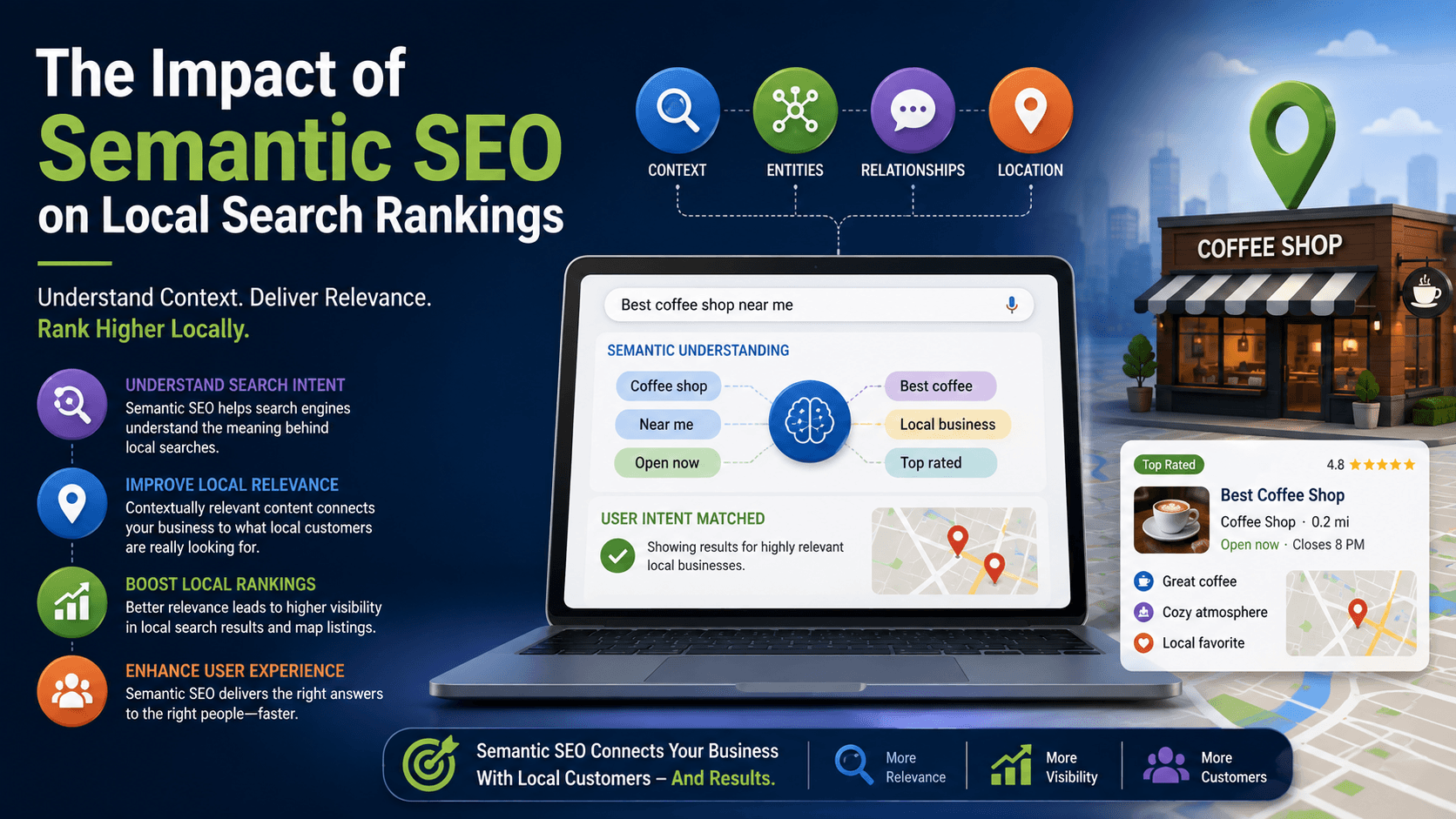
For years, Search Engine Optimization (SEO) was largely about keywords. Stuffing your content with relevant terms was often enough to signal to search engines what your business was about. However, with the advent of more sophisticated algorithms and the rise of AI Search, the game has changed. Today, Semantic SEO, is paramount especially for local businesses aiming to dominate their local search rankings. It’s no longer just about *what* keywords you use, but *how* search engines understand the meaning, context, and relationships between those keywords and your business.
Semantic SEO focuses on topical authority and entity-based SEO. Instead of simply matching keywords, search engines now strive to understand the user’s intent and the broader topic behind their query. For a local business, this means creating content that comprehensively covers subjects relevant to your industry and location, establishing your business as an expert in its field. For example, a local bakery shouldn’t just mention “cupcakes”; it should also cover related entities like “artisanal pastries,” “gluten-free options,” “local ingredients,” and “custom cake designs.” Platforms like Town Lister, by allowing detailed categorization and descriptions, help search engines build a richer semantic understanding of your business.
When your online presence, including your website and directory listings, provides a rich tapestry of semantically related information, search engines can more confidently connect your business to a wider range of relevant local queries. This enhances your local discoverability and improves your chances of appearing in AI Overview optimization and Featured Snippet optimization. By demonstrating a deep understanding of your niche and providing helpful, user-first content, you signal to search engines that your business is a valuable resource. This strategic approach to content, supported by accurate and detailed listings on platforms like Town Lister, ensures your business is not just found, but truly understood and recommended by today’s intelligent search algorithms.
Frequently Asked Questions
What is Semantic SEO and how does it differ from traditional SEO?
Semantic SEO focuses on the meaning and context of words and topics, rather than just individual keywords. Traditional SEO often prioritized keyword density, while Semantic SEO aims to help search engines understand the overall subject matter and user intent, leading to more relevant search results.
Why is topical authority important for local businesses in Semantic SEO?
Topical authority establishes your business as a comprehensive expert on subjects relevant to your industry. For local businesses, this means covering all aspects of your local niche, which signals to search engines that you are a trusted and authoritative source, improving your local search rankings.
How can Town Lister help my business with Semantic SEO?
Town Lister allows for detailed descriptions and categorization of your business. By providing rich, semantically relevant information in your listing, you help search engines better understand your business's offerings and context, enhancing your entity-based SEO and overall local discoverability.
What are some practical steps to implement Semantic SEO for my local business?
Focus on creating comprehensive content that answers common customer questions. Use related terms and concepts naturally throughout your website and online profiles. Ensure your business categories and descriptions on directories like Town Lister are as detailed and accurate as possible to build topical authority.